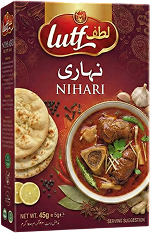
In the heart of the subcontinent’s food culture, few dishes command the respect and devotion of a classic Nihari. Born in the royal kitchens of 18th-century Delhi and perfected in the bustling lanes of Lahore and Karachi, Nihari is more than just a breakfast dish—it is a celebration of slow-cooked, deeply spiced perfection.
The name itself originates from the Arabic word “Nahar,” meaning “morning” or “daybreak,” as it was originally simmered overnight for hours to be served after dawn prayers. The result? Tender, melt-in-your-mouth shank meat submerged in a rich, fiery, and aromatic gravy, thickened with wheat flour to give it a luxurious, velvety finish.
At Lutf Masala, we believe in bringing this traditional heritage to your family’s table using only pure, 100% natural ingredients—without the heavy artificial colors or chemical preservatives found in commercial brands.
The Anatomy of an Authentic Nihari
A truly authentic Nihari does not rely on vegetables or heavy tomato pastes to build its body. The magic lies in the marrow, the slow rendering of the fat, and a delicate balance of ground spices.
- Nalli (Bone Marrow) and Shank (Nali Gosht): The marrow and gelatin from the bone-in shank are what give Nihari its natural, lip-smacking richness.
- The Aromatic Garam Masala Base: Cubeb (Kabab-Chini), long pepper (Pipal), green cardamom, mace, and nutmeg ground together to give the dish its signature warming scent.
- Kashmiri Chilli: Used for the deep, fiery red surface without overwhelming the stomach with excessive heat.
Why Purity Matters in Slow-Cooking
Nihari requires long hours of slow, patient cooking. Because the dish relies on the natural oils and the slow extraction of flavors from the meat, using unadulterated spices is crucial.
Many commercial packets rely on synthetic dyes, stale ingredients, and excess sodium. Lutf Masala uses only whole spices ground in small batches, ensuring:
- No Artificial Preservatives: You enjoy the true, traditional taste of royal cuisine without chemical aftertastes.
- ISO 22000 & Halal Standards: Processed in hygienic, certified facilities so you know exactly what is going into your family’s pot.
Cooking the Traditional Way
To achieve that authentic, restaurant-quality consistency at home, you need to follow a few core steps:
- The Bhunai (Searing the Meat): Always sear your meat with ginger and garlic paste over high heat before adding the spice mix. This seals in the flavors and gets the rendering process started.
- The Flour Slurry (Aata): To thicken the gravy without losing flavor, mix whole-wheat flour with cold water and pour it in gradually while stirring continuously to avoid lumps.
- The Golden Tarka Finish: Top the Nihari right before serving with a fragrant tarka of caramelized onions and a pinch of Kashmiri chilli for a vibrant look.
Serving Suggestions
A hot plate of Nihari is best accompanied by:
- Taftan or Khameeri Roti: Thick, slightly sweet flatbreads designed to soak up the rich, silky gravy.
- Garnish Plate: Finely sliced fresh ginger, crisp green chillies, fresh coriander leaves, and lemon wedges to cut through the richness.
At Lutf Masala, we make sure you have the real, authentic, asli ingredients to keep our food heritage alive. Keep the tradition pure!